
An industry representative and an academician had expressed their reservations during the deliberations, says Srikrishna

During an open house discussion with stakeholders on the draft Digital Personal Data Protection (DPDP) bill 2022, Chandrasekhar said that the right to privacy is a fundamental right while the right to information is not. "Right to privacy is a fundamental right and right to information is not.

Even as outsourcing demand from Europe revives after the debt crisis, data protection regulations in the region governing trans-border data flows could hurt the $108 billion Indian IT-ITeS industry.

'The real risk is not that AI will fail to transform India's economy.'
'The risk is that it already is -- while our measurement systems continue to look the other way,' observes Nishant Sahdev, a theoretical physicist at the University of North Carolina.

If the Personal Data Protection Bill gets passed in its present form, a new class of companies and entities could emerge. The sole job of these new entities would be to manage the consent for data usage of a user.Banks, healthcare firms and fintech companies, among others, fear that sharing non-personal data with the government may hurt business interests. Banks also fear the threat of data misuse.

From the 30-Sensex firms, Bharat Electronics surged nearly 9 per cent post its December quarter earnings. Eternal, Bajaj Finance, Power Grid, Trent, Mahindra & Mahindra and UltraTech Cement were the other major gainers. Maruti, Sun Pharma, Infosys and Bharti Airtel were among the other laggards.

The government has raised the penalty amount to up to Rs 500 crore for violating the provisions proposed under the draft Digital Personal Data Protection Bill 2022 issued on Friday. The draft personal data protection bill in 2019 proposed a penalty of Rs 15 crore or 4 per cent of the global turnover of an entity. The draft proposes to set up a Data Protection Board of India, which will carry on functions as per the provisions of the bill.

'If Indians are to be truly protected, Parliament must review and address these dangerous provisions before they become law.'

In a first of its kind move, the Indian Railways Catering and Tourism Corporation (IRCTC), the ticket booking arm of the Indian Railways, is looking to monetise its bank of passenger data while conducting business with private and government companies. IRCTC has a large bank of data related to every online railway ticket ever generated as it is the country's only railway ticketing platform, an IRCTC official told Business Standard. The public sector undertaking, which has sought the services of a consultant to assist with the monetisation process, plans to raise Rs 1,000 crore through this exercise.

This comes a day after President Droupadi Murmu gave her assent to the Viksit Bharat Guarantee for Rozgar and Ajeevika Mission (Gramin) (VB-G RAM G) Bill, which replaces the MGNREGA and has a provision for 125 days of wage employment for rural workers.

The government will "notify such countries or territories outside India to which a data fiduciary may transfer personal data", according to the draft unveiled on Friday for public feedback.

Ask rediffGURU Naveenn Kummar your insurance mutual fund and personal finance-related questions.

Inputs from religious texts, scriptures of local dialects and inspirational word-of-mouth stories will also be included.
The Bill says that the central government, in consultation with the Data Protection Authority, can direct any data fiduciary or data processor to provide non-personal data to enable better targeting of delivery of services. The government can also ask data processors to provide data for formulation of evidence-based policies for its own use.

The rupee breached 90-levels against the greenback for the first time on Wednesday, falling 6 paise to 90.02 in early trade, as banks kept buying US dollars at higher levels and FII outflows continued.

After the draft data protection bill, the government is now all set to bring another key legislation -- Digital India Bill -- that will be made available for public consultation by the month-end, Minister of State for IT Rajeev Chandrasekhar said on Thursday. The Digital India Bill, which will replace the 22-year old Information Technology (IT) Act, will be contemporary and a modern piece of legislation, the Minister promised. The proposed bill, alongside the Digital Personal Data Protection (DPDP) Bill whose draft was released recently, will contribute to the evolving framework which is light on regulation, safeguards consumer rights and catalyses innovation, the minister said while speaking at CII Global Economic Policy Summit 2022.

Since the deadline for Justice B N Srikrishna Committee's feedback is December 31, the government is unlikely to table a data protection Bill in the winter session of Parliament.

'Other sectors that manage the savings pools of Indians are giving tough competition to life insurance companies.'

The legislation is aimed at streamlining various services related to immigration and foreigners, including their entry, exit and stay in India.

Parliamentary Affairs Minister Prahlad Joshi has said that 31 bills will be taken up in the monsoon session. Among these include the Digital Personal Data Protection Bill, 2023.

In the worst-case scenario, it will be next to impossible for tech companies like Amazon and Google to run any service that requires user biometrics.

Google's chief privacy officer, Keith Enright, has warned policymakers that frequent and large-scale sharing of citizen data, even if anonymized, can damage users' privacy. Pointing to research that shows data sets lose their anonymity if shared consistently over time, he said: "I would encourage policymakers and companies to be extremely circumspect while proceeding in that direction." Anonymization is a technique that removes or modifies personally identifiable information, resulting in data that cannot be associated with any one individual.

The Aadhaar and Other Laws (Amendment) Bill, 2019 was passed in Rajya Sabha by a voice vote, although many parties including the Trinamool Congress and Dravida Munnetra Kazagham opposed it citing various reasons, including apprehensions data theft.

India is proposing a new law that would impose a jail term of up to seven years and a fine of Rs 10 lakh on anyone found using a forged passport or visa to enter, stay, or exit the country. The Immigration and Foreigners Bill, 2025, also mandates reporting of foreign visitors by hotels, universities, and hospitals to track overstaying individuals. The bill aims to simplify laws, ease business, and strengthen national security while promoting economic growth and tourism.

Four-time Odisha MP Pinaki Misra's wedding to firebrand TMC MP Mahua Moitra in a quiet, intimate ceremony that chose privacy and tradition over fanfare, was a reflection of his personal style.

Investors should be mindful of the high volatility in cryptos: Bitcoin has fallen more than 80 per cent in past corrections.

EU and UK laws require airlines to incorporate data protection measures and report data breach to regulators within 72 hours. Non-compliance can invite steep fines.

Billionaire Mukesh Ambani on Friday backed the proposed data privacy and cryptocurrency bills, saying India is putting in place the most forward-looking policies and regulations. Ambani, who has been a votary of Indians owning and controlling their own data and the nation drafting strict rules around how digital information is stored and shared, said nations have the right to build and protect strategic digital infrastructure. Stating that data is the 'new oil', he said every citizen's right to privacy has to be safeguarded. "India is putting in place the most forward-looking policies and regulations," he said at the Infinity Forum, hosted by International Financial Services Centres Authority (IFSCA).

The government will investigate a claim that WhatsApp accessed the microphone of smartphone users while the phone was not in use, Minister of State for Electronics and Information Technology Rajeev Chandrasekhar said on Wednesday.

The Archaeological Survey of India informed the JPC that 280 protected monuments have been listed as Waqf properties.

The panel will likely play an important role as the Personal Data Protection Bill gets tabled in Parliament.

The Karnataka government on Wednesday put the reservation bill for Kannadigas in private firms on hold amid fierce criticism from business leaders and tech tycoons.
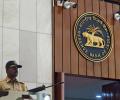
Reserve Bank Deputy Governor Michael Patra on Wednesday said the central bank's views about cryptocurrencies might have delayed the government's proposed legislation on crypto assets. Emphasising that the Central Bank Digital Currency (CBDC) will be introduced in FY23 as announced by Finance Minister Nirmala Sitharaman in the Budget speech, Patra said India will proceed very gradually on the subject as there are concerns on privacy, its impact on monetary policy formulation and energy intensity. The government had plans to introduce a bill on cryptocurrencies like Bitcoin during the Winter Session of Parliament in November-December 2021 but did not introduce it.

Here's what you must know about the new rule, its implications, and whether it affects taxpayers' rights and privacy.

Responding to debate on the bill, Sports and Youth Affairs Minister Anurag Thakur said it will promote sports and protect the interest of sportspersons.

Passed by the House by 352 to 65 votes, the bill now heads to the US Senate for it to be sent to the White House for the President to sign it into law.

A five-judge Constitution bench headed by Justice KM Joseph asked the mobile messaging app to give advertisement in five newspapers to publicise its undertaking given to the government.

Women are a minuscule minority of those arrested under the IT Act.

The amended bill also provides for a stiff Rs 1 crore penalty and a jail term for private entities for storing Aadhaar data.

The digital platforms are responsible and accountable for ensuring the safety of 'digital nagriks', the minister said, adding that the government will respond to every instance of alleged misuse or alleged breach of users' privacy.
 © 2026 Rediff.com - Advertise with us - Disclaimer - Privacy Policy - Sitemap - Feedback - About us - Terms of use - Grievances